Season 01 / Episode 001
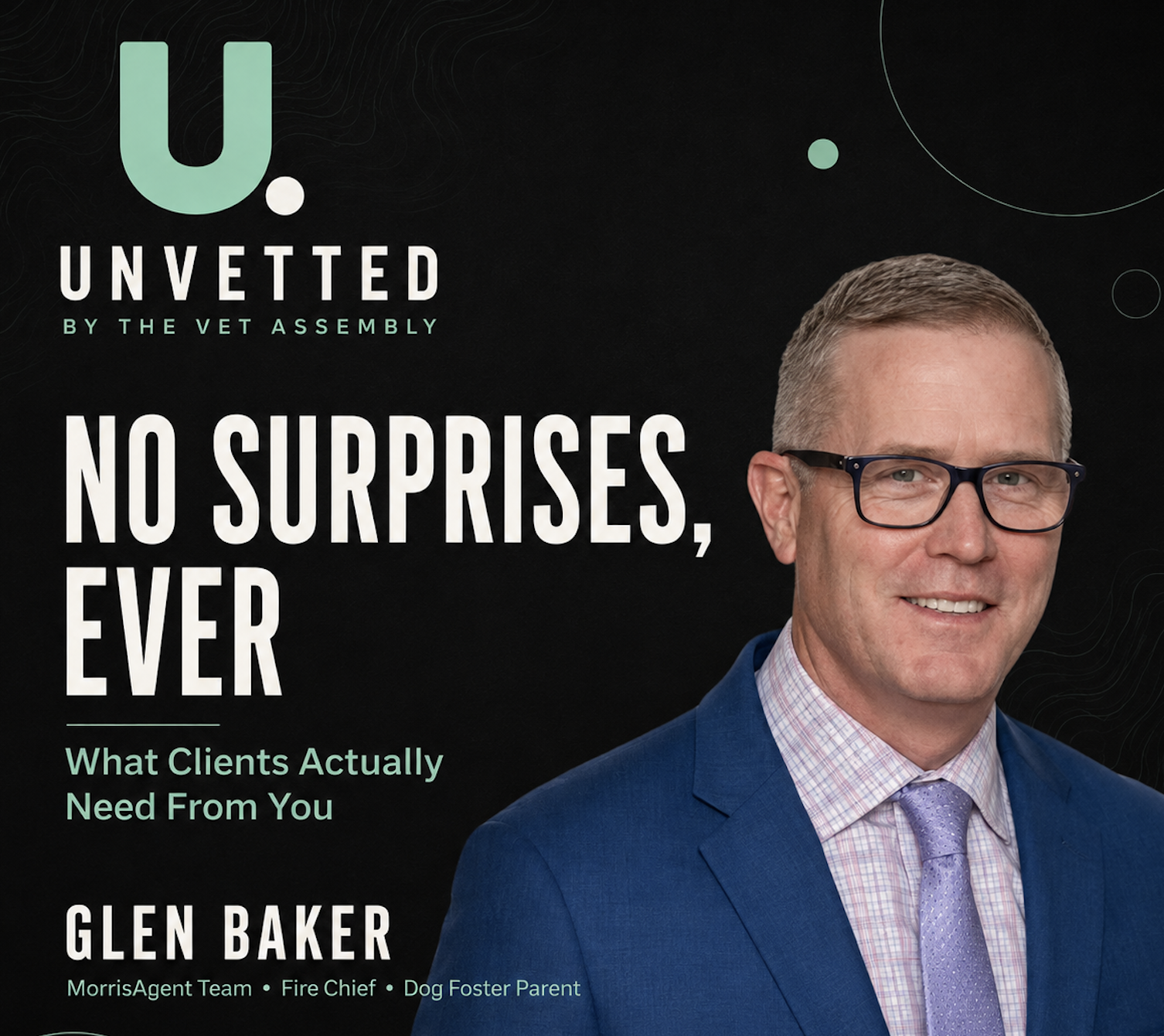
No Surprises, Ever: What Clients Actually Need From You
Glen Baker brings an outside-in look at veterinary client experience: why surprises destroy trust, what great service actually feels like, and what veterinary teams can learn from businesses built on relationships and referrals.
About this episode
Veterinary medicine spends a lot of time talking about client communication. This conversation looks at it from the other side.
Glen Baker is the founder and team leader of the MorrisAgent Team, where he has built a referral-driven real estate business around a simple promise: “No Surprises, Ever.” He also serves as Chief of the Boonton Fire Department and has spent years fostering dogs — three very different environments where trust, communication, and how people are treated matter enormously.
Glen joins UNVETTED to talk about what clients actually notice, why communication often matters before you have an answer, what destroys trust, and what service businesses get wrong when their internal process becomes more important than the person experiencing it.
This isn’t a veterinary professional explaining veterinary clients. It’s a conversation about client service with someone who has spent his career earning trust — and has experienced veterinary medicine from the client side.
In this episode
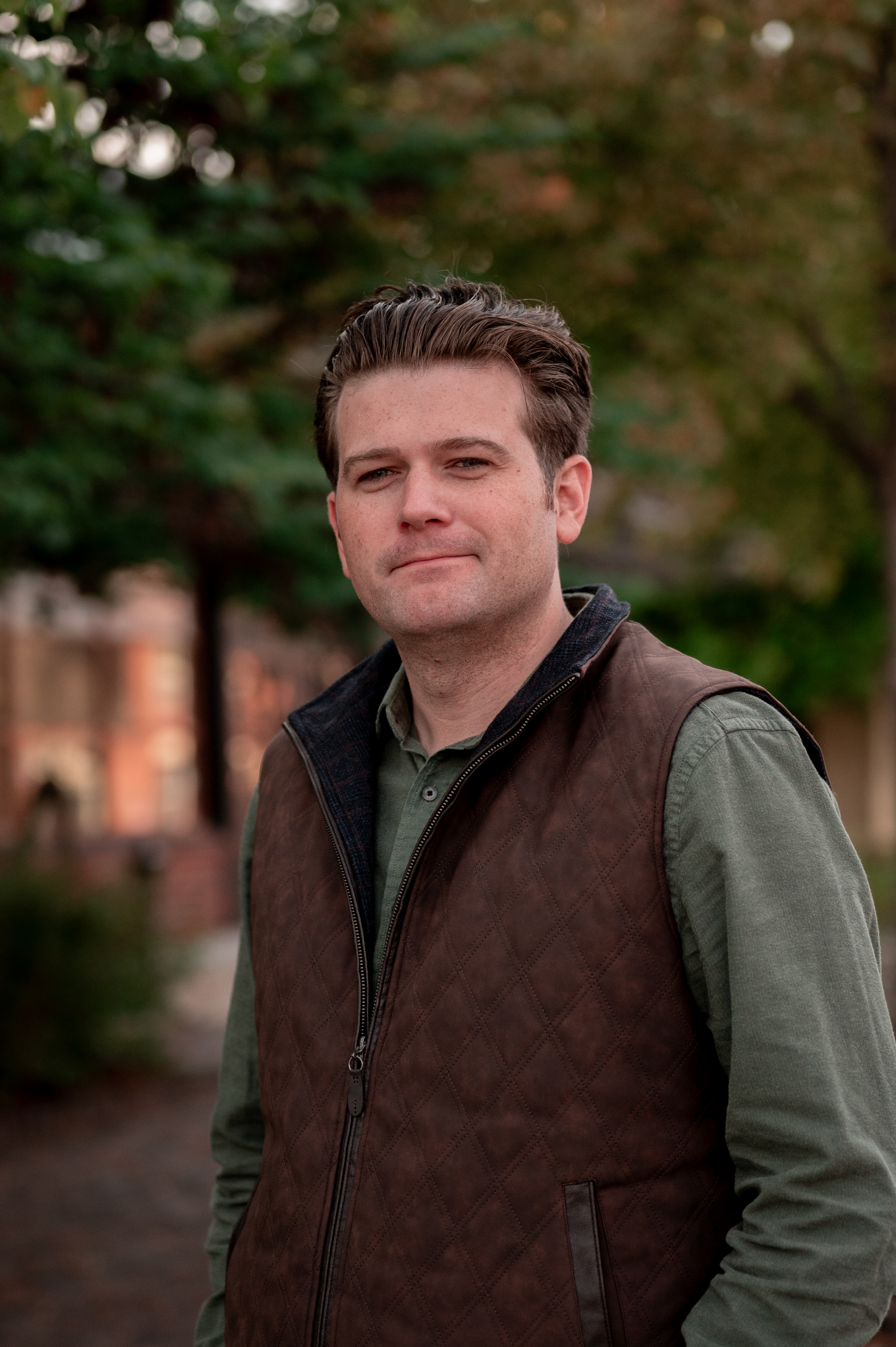
Brendan Baker is the founder and CEO of PawthosX and Co-Host of Unvetted. Before building veterinary technology, he spent years operating veterinary hospitals across general practice, urgent care, and rehabilitation. His work now sits at the intersection of veterinary medicine, technology, operations, and the systems shaping the profession. On Unvetted, Brendan brings an operator’s perspective to the conversations veterinary medicine usually avoids, sanitizes, or leaves unfinished.
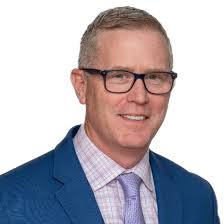
Glen Baker is the founder of the MorrisAgent Team at RE/MAX Select and Chief of the Boonton Fire Department. He has built a referral-driven real estate business around high-touch client service and one simple promise: “No Surprises, Ever.” He is also a longtime dog foster specializing in pit bulls and mixes.
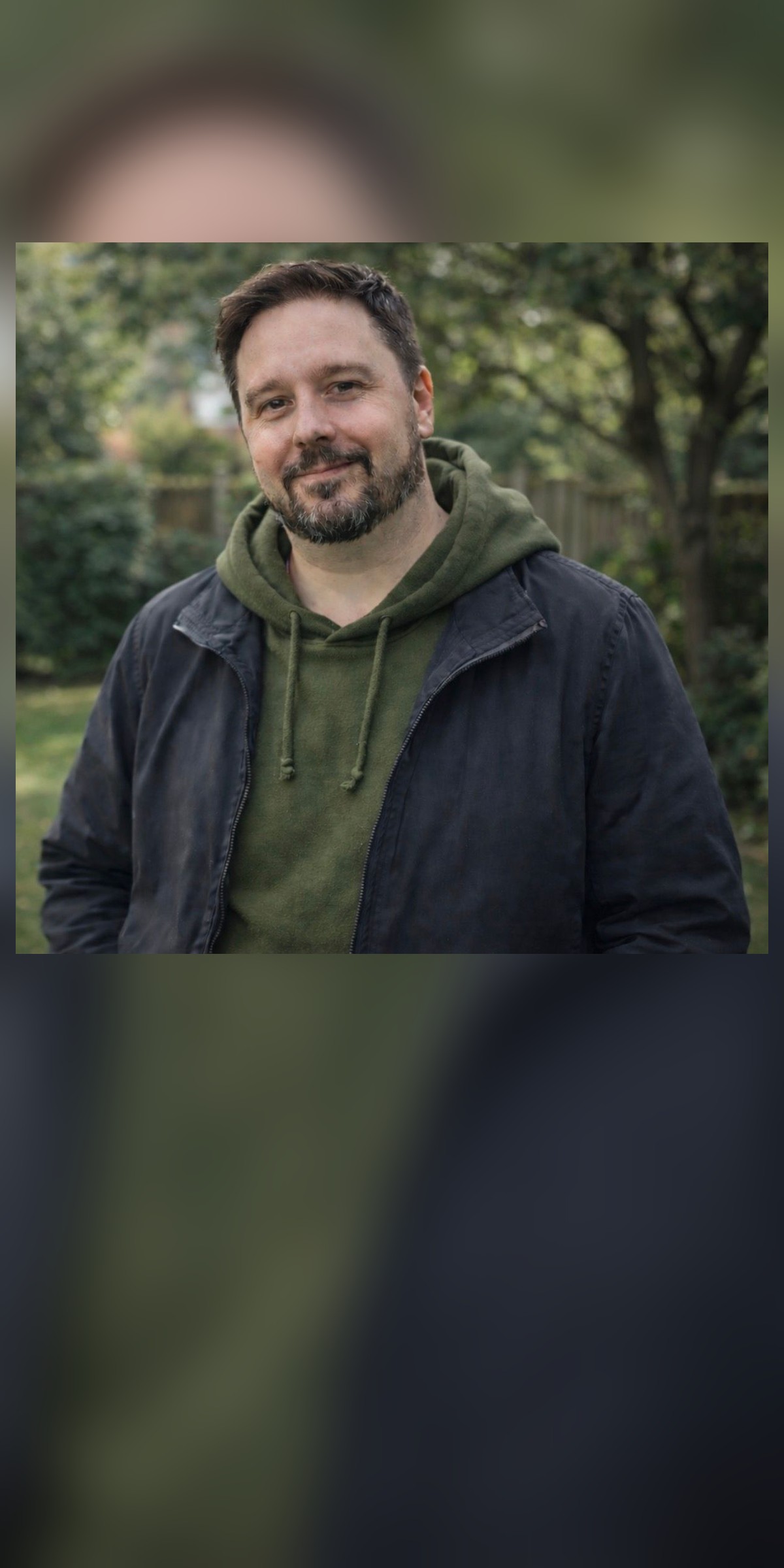
Ricky Sussams is the founder of VetStack Consulting, an independent UK veterinary technology consultancy and Co-Host of UNVETTED. He came up through practice as a practice manager and then group manager, before leading PMS rollouts across more than 800 sites at CVS, VetPartners and IVC Evidensia, and customer success at PetsApp and Lupa. VetStack takes no referral fees and resells nothing.
Show notesEpisode details, chapters & links
What does great client service actually feel like from the client’s side?
Glen Baker has built the MorrisAgent Team around a simple promise: “No Surprises, Ever.” His business depends heavily on relationships, referrals, communication, and helping clients through decisions that are expensive, emotional, and often uncertain.
That makes his perspective particularly relevant to veterinary medicine.
In this conversation, Glen and Brendan look at client experience from outside the veterinary industry: what creates trust, what causes clients to lose confidence, why communication matters even when there is nothing new to report, and why technically excellent service can still feel terrible to the person receiving it.
They also explore what Glen has learned from leading in the fire service, where communication happens under genuinely high-stakes conditions, and from years as a dog foster navigating veterinary care from the client side. Glen currently serves as Chief of the Boonton Fire Department and has fostered dogs through 11th Hour Animal Rescue since 2018.
Three key takeaways:
1) No surprises is a service strategy. Clients can handle bad news, delays, cost, and uncertainty better than they can handle being blindsided.
2) Communication is part of the product. You don’t have to have the answer yet to keep someone informed. Silence creates its own story.
3) Clients experience your company differently than you do. Internal workflows, policies, handoffs, and technology only matter if they make the experience better for the person on the other side.
Links & resources
MorrisAgent TeamGlen Baker — MorrisAgent Team ProfileMorrisAgent Team“No Surprises, Ever” — MorrisAgent Team LeadershipZillowGlen Baker Client ReviewsMorrisAgent TeamGlen Baker — Client Service & Problem-Solving ReviewsLinkedInGlen Baker — Professional ProfileHomes for Heroes2025 Homes for Heroes Affiliate AwardsTranscriptRead the complete conversation
Ricky Sussams: [00:00:00] We want honest conversations about the veterinary profession, the technology, the operations, the decisions that actually shape how practices run, and we'll talk about what's working, what isn't, and what people usually only say once the recording stops. do you know how terrible it is to be asked for payment once that occurs? Like, as a customer experience, I just put the absolute love, kissed him on the snoot. we have no excuse in today's economy to not use AI and the data to service human beings better, and maybe even make us work a whole lot less. Introductions Ricky Sussams: so it's finally good to hit record. Uh, the idea behind this podcast is simple. So very quickly, I'm Ricky. I started out as a practice manager, then moved into group management and be- and spent the best part of two decades with CVS, Vet Partners, IVC, Evidensia, Pets Up and Lupper, and today I run Vet Stack, which is an independent veterinary technology consultancy. That's enough about me. I'm not doing this alone, so joining me is [00:01:00] my co-host, Brendan, who brings a very different perspective to mine. Uh, that should keep things interesting, and it means, uh, I won't always get the last word, and for episode one, we've got Glen with us, and I'll let him tell you properly who he is and what he does, but he's exactly the kind of guest this show was made for. So Brendan, over to you to introduce yourself first. Yeah. So I am Brendan Baker. I started out in human medicine. Uh, during COVID, got burnt out, got rescued by VetMed, and have a,, um, supporting this field from that and a unique view. I was a hospital manager for, general practice urgent care and rehab and started a platform after a really terrible PIMS transition, so, uh, decided 35-year-old software isn't good for the industry Over to you, Glenn All right. Thanks so much. So, uh, Glenn Baker here. I'll c- I'll say serial entrepreneur, as you can see below. Um, started and sold multiple companies. Uh, my last big sale was $91 million, and that was a, uh, a practice which we did finance and accounting services. Today I run, uh, both a coaching company as well [00:02:00] as a real estate, uh, sales team out of, uh, New Jersey Thanks for being here. And you're not here because you spent 25 years running veterinary hospitals, and that's kind of our point, as Ricky mentioned earlier. You spent the decades in businesses where trust, reputation, and referrals matter. Uh, you've also been the person on the other side of the exam room floor... I mean door. My apologies there. So what do we stop seeing when we're inside this industry? Yeah, interesting. Interesting point. So I, you know, I, I, I pride myself, I, I... Everyone's got a superpower, right? And my superpower is mating up technology with humans. Yours is interesting because I look at it and go, "Well, how do I interact with a pet and a human," right? Two pieces to it. And when I look at that, I say there's a- it's such a complex mess of just problems to solve. And as a recipient of those services, uh, I've always been underserved, right? I think that I've never really walked out and been like, "Boy, that was a great vet visit." It just never was that... I never felt that way. And I look at it as a recipient [00:03:00] of that, there's so much value that can be had, and there's so many things that can be done to improve the experience, and I've never really seen that. And that's kind of why your model intrigues me, Hair, as an entrepreneur too, right? And it's important to note, too, that the United States and the UK do have different experiences. Uh, in the UK pet insurance is very big, so the money factor comes out of that conversation. And I think a lot of the uncomfortableness within the United States comes from the money conversation. Yeah. And I mean, look, everyone feels like you're being... your wallet's being shaken down when you go to a vet, and you can't believe that s- people, y- like when I walk in and I get my pet treat, I'm like, "I wouldn't spend that on myself." So holy cow, now I'm spending it on a, a pet. So the experience should be totally over the top. And I have to tell you, all the industries that you mentioned that I've been in, so I've been in, uh, 400 of the Fortune 500 CEO suites, right? And I've sold product to them and done services for them. And the one thing that's so easy about it is it's very easy on a one-to-one basis to suddenly serve them because I find the need, [00:04:00] I pro- solve a problem, I make money, right? That's, that's really the, the recipe for almost any business, right? Solve a problem, make money, um, and have value. The, in, I look at the industry for the pet industry as one where the practitioners, meaning the doctors, are really good at helping pets. That doesn't mean they have a person-to-person personality. It doesn't mean that they're able to do a lot of those, those other things that make me feel warm and fuzzy as a consumer. And I've never really walked out of one where that was at their advantage, right? That they, they're able to do that and service me the way it is. And I think that there's, using specifically AI, uh, there is a, a- an immense opportunity for resolution of that You, you, you mentioned right at the very beginning that, uh, y- you, uh, sort of marry up the, the client and the software. That's your, that's your super pow- power. But where does A- AI fit into that then? If, if clients... If it is, if it's humans talking to humans, and humans prefer talking to humans, where does AI fit in, into that, and where do you see [00:05:00] its AI & Customer Experience Ricky Sussams: place? This gets me so excited. So I'll, I'll speak non, uh, pet med, right? And then I'll speak pet med and my perception of how, how it looks. So non-pet med, um, the reach and the amplification of what I am is phenomenal, right? I can, I can reach more people with my message in my voice and syndicate that out and grab more market share, right, for more clients. But the best part is they still, they still feel like it's me. The messaging is me, oppo- because it owns my voice, right? So the amplification of that's phenomenal. The way that I can consolidate and target markets is like never before. Things that... Or projects that I would go, "I'll figure that out someday," I can now do in 15 minutes. So from a perspective of non-pet med, that would be it. My vision in pet med is probably a little more extreme, 'cause I look at the customer experience. CX is so important to me. When, when design thinking was a thing before AI and everything else hit, uh, I was very much involved in design thinking and design of how process should be, and map it out so that the [00:06:00] experience matches the expectation. Glen Baker: Um, now I look at this and I'm like, "Wow, pet med." So if I walk into a room, uh, I'll use the word Internet of Things, all the devices that could be in the room. They could be listening for the tonality and the inflection of my voice. They could be listening to hear me sobbing, sobbing because I know I'm gonna lose my pet, right? And I, I have to say, like, a lot of vets don't... Th- they, they see it every day, right? It's just like a doctor, so it's very mechanical for them. But that's not how people are. So if I can solve that grief gap or that concern gap, and I can start to address and go, "Hey look, I can kind of tell that you're not doing so well. Let me give you some things that I see people do to manage this process," all of a sudden you're a human dealing with two different clients, right? With two different personalities. One that can't tell you anything, one that's telling you things and you have no idea how to read it. So if you can match that up, you suddenly solve the customer experience because customer experience wants to be, "They really care about me. They really care about my pet, and we're together a team." Um, I think that's one. The second is, and this is the most [00:07:00] exciting thing on earth, and if medical ever figures this out anywhere in the world, they are gonna kill it. Anonymized data, right? You have a bunch of vets, in my scenario in my head, this is how I play it out, on a system. I have 100,000 use cases of here's how we've treated these pets. If I can anonymize that data and say, "This is the best for 100,000 sample cases, this is the top treatment, and here's why." And now that vet who has seen it 10 times- has access to 100,000 of those, that is like the, the magic elixir, right? Because now you've taken care to a level where it's no longer a single person treating. You have all the other vets contributing to that, and for the outcome to be better because the probability is better statistically speaking because they've had success that many times. I look at that as like Mecca. If you can figure that out and make it happen properly, um, and if, if, if, if they can do it for humans, please do, 'cause I really need that. So. Well- I've- ... I'm over here [00:08:00] grinning because I completely agree, and, uh, gonna go from there. Ricky? Well, w-w-we already know that someone has done this very recently and now has that kind of access to that kind of data. Brendan Baker: Um, I, I wonder if there's ever been a time, Glenn, um, that you've been working in a, a, in an industry that ha... You've done this before where you've, you've taken anonymized data on that kind of that level of extreme and, uh, been able to give really great benefits back, uh, to the people where that industry is serving. But more importantly, did you also get any pushback around privacy, pr- uh, data privacy, the fact that people are unsure what you're going to do, there's a lot of skepticism, for example? Um, anything like that? Glen Baker: Yeah. I have a, I have, I literally worked on the project that changed the entire cellphone Cellphone Industry Parable Glen Baker: industry. So everyone remembers when we bought cellphones, you had a, you had a payment plan and you were roped into a two-year contract and things like that. Well, there was one [00:09:00] pioneer that came out and said, "Nah, portability. Everyone can go anywhere." But the problem was, was that the whole industry was designed around capturing the client and trapping them, putting handcuffs on them, right? And these guys said, "We're not gonna do that anymore. Here's how we do it." So they would... And I can't say who it was, but you'll figure it out. Uh, but, uh, they took the... What they did was they went out and they said, "How do we take all of these cellphone backs that we pay a premium for?" So they would buy them back at a premium because they had to pay off the other contract to get the people to come to their contract, right? Or their non-contract, so to speak. Well, when they did that, they had all these devices, and what they decided was, "We're gonna sell those devices overseas where there, there's a premium and the people want them, but they don't have access to them." So they take all these devices in and they... The problem was, was that you had so many devices and so many were broken. Ricky Sussams: Like, who trades in a cellphone that's working perfectly, right? So you, they, they immediately went out and said, "How do we source consumer information to figure out what's breaking?" And what [00:10:00] they did was they searched Facebook groups, Reddit, w- and they had these bots that went out across the entire internet and found what the iPhone button on that model's breaking. The camera breaks on this model of the, uh, Android. And they would predictively buy the parts, get it in, and ship it overseas as fast as humanly possible. And they brought in all these data sources, and it was, it was essentially public information. People love to complain on social media, right? But they took that in and created a whole entire change, pioneered the industry, and now we're all not paying for contracts anymore because of them, right? And it was that intelligence to say that little piece of information, which is people complaining, can contribute to making it so I can move product fast enough to make this product work so I don't have a warehouse full of phones and a warehouse full of people trying to manage those phones. It was absolutely pioneering, and they took non-public information. Glen Baker: So now take that back and say, we now have information that's available to us, which is all of the prior case history and [00:11:00] what I see in the room. Match those together and suddenly you have a customer experience second to none. And, and what's interesting about that, quite honestly, is, and this is not on the client service side, but it is from the software to client service side, there is a lot of talk around that portability and that lock-in right now. Yeah. And that is a huge problem because obviously, I, I, you know, I'm obviously in the software space. My belief is that portability creates competition, competition creates us being better, which is always better for the client experience, right? So I think that it's really unique that that example specifically to software vendors out there who might be thinking that lock-in is the way to go. Uh, a w- wise person when I started in vet med said to me that human, uh, vet med is 10 years behind human health in the US, and I would agree with that in the sense of these concepts. Uh- Yeah, I mean, look, look at the industry as a whole, right? So software providers across all spectrums, right? I'm a CIO of 17 years, so I, I'm super techy, love everything about tech. It's, it [00:12:00] actually thrills me. But what never thrilled me was implementation times, they're always long, and carrying cost when I didn't need it because I don't use the platform anymore, right? And the onus on a provider like yourself is make me happy enough I don't want to leave, or make me happy enough... Ju- it, it only has to be good enough to not leave, right? You don't have to blow the doors off it. You just have to make sure that your value is greater than what I'm spending, and that if I choose to go somewhere else, it's with good reason because it's the next generation, not just because you're meh. Like, uh, and I think that that's, that's the ch- and if you have that, if you have the value, you can say, "Look, it's gonna take 12 months to make the system work for you," right? "We've got to get you on, but I don't care what you do after 12 months." There's a huge value to that because it's not really locked in. That's good practice to take care of people and pay attention to getting them operational. And then once you're operational, if I don't provide you the value, you should go somewhere else, right? Yeah, like, uh, it's, uh... And I think that this, this logic [00:13:00] of I lock you into a system, and that you can't go anywhere, and that your data is now my data, that stuff, those days are Software Lock-In & Portability Glen Baker: over, right? It's just not, it's not acceptable to many people in the marketplace. Uh, this is a strange one because I don't think we have a similar thing in the, i- in the UK. I mean, there's, there's a little bit of a lock-in. Um, some of the incumbents may have slightly lengthy contracts. Um- But data is, is the clinic's data. Uh, and so clinics are able to get that out and move around, uh, to different suppliers. I think w- where it falls over is the value may not be being delivered, but it's certainly safer to stay versus the perceived cost of moving. Um, because historically data migrations have not been brilliant. Uh, and I think there are a lot of horror stories, um, [00:14:00] certainly I have been part of them. Ricky Sussams: Uh, so there are lots of horror stories, uh, with, with bad data migrations that have put people off. And so we, we've still got people using, uh, sort of, uh, Windows NT-based servers physically on premise, um, that are just waiting for, for something to go wrong on, on, on that machine. Um, but how do you, how do you de- Like, h- have you ever had to deal with something similar in any other of the businesses that you've, that you've done? Glen Baker: Oh, every one, right? So as a CIO, I've done 100,000 person Salesforce implementations, right? And, um, you know, the... I think that the answer to the problem is, one, migration has to be fluid. And I, I just recently did a triple platform changeover a month and a half ago, right? And I did it in a month and a half, and prior it would've been eight to nine months without breaking a sweat. AI did it for me. It was able to do the [00:15:00] things that I can't, I can't hire people to do quick enough. So I think there's a AI migration piece. The less pain ripping off the Band-Aid to get over is important. Carrying two systems is very, very hard, right? That's, uh, most people can't do that or have, don't have the staffing to cover two systems, so it's gotta be a pretty clean break to get over. And the one thing that I'll say is as all of those systems, this is a, and this is an age-old problem, right? Like, there's nothing in technology since the dotcom bomb in 2000 this problem exists, and it exists today in AI, by the way, too, right? If you look, every Tom, Dick, and Harry has an AI app Like it's, you can create it with AI and they have zero data structure, zero c- privacy, zero everything. The, all of these solutions are going away just like the year 2000, right? The people that have data structure, understanding of how that works, how to make an app properly, they're gonna be the ones that win. But in between, there's gonna be a bloodbath, and it's happening. 2030 is my prediction that that's gonna kind of all shake out a bit. But where I'm [00:16:00] going with that is, is that all of the people who think that I'm gonna have this solution of my own, I'm gonna create it on my own. Um, everyone saw what happened with SAP, Salesforce, large, heavy dollars, heavy consulting implementations, and the outcome was never what people wanted because they all thought they knew better than the system. If you can create a customer experience in a system, and there's the whole system designed around that customer experience, and then your people are able to use that system, slam dunk. Because at that point, you've designed a system that's for the person you're servicing, not for the person operating in the back office. And everyone makes the mistake of focusing on the back office when if we're in a service industry, which this, yours industry is, my industry is, everything forward-facing better be as friendly as humanly possible and as value-driven as possible and deliver that, or the system will just flop. And I think that if you look at legacy providers in every single industry, I'm sure they're the same in vet- I'm not all familiar with all the vet practice ones. They're all the same way, right? They design the system so that they can [00:17:00] process data. Data is meaningless. It's people. People buy people, right? And if you're not able to make it so that it's so fluid for me... A- and look, I, I'll just make a little note here that's really interesting about yours. Your practice is veterinary focused, right? There is really nothing different from your practice as a vet practice to a contractor They are excellent at being contractors and building stuff. They are terrible as business people. I know some vets think they're good at business. I'm terrible at business. I'm an awesome salesperson, right? So I know, know limitations. So what you're solving in this is solving across the board, right? Because they're great as practitioners, not great as business people. And if, but if you could somehow give them the crutch that makes them hobble along better and produce a more I, I care about you front. Like, hey, this person last time was, I don't know, a D and an I on the DiSC profile, right? If you can assess from their voice conversation where they stand, suddenly you know I don't want the vet to tell [00:18:00] me how they built the watch. Just tell me the medication, let me out the door. But if I'm the huggy-feely I type that wants to know a little bit more about everything and I have to talk to you for a while, the vet should say you should probably talk to them a little longer than everybody else. That is amazing customer service, because you're tailoring it to a personality type, right? I think that stuff is where everyone's going. You have to. If, if there was only a system out there working on things like that with a team. Now, uh, the interesting, the interesting thing about that, uh, is, is that I, I would start with as someone who's run a vet practice, I would agree that there's a lot of information like that, and teams aren't necessarily the greatest people at reading each other, right? And not even themselves, but their clients. Um, we pivoted off in the software, and I kind of want to get back to how this could affect and how we can apply this to the actual workflows within a vet hospital. So taking those, those principles and putting them into the actual visits flow, uh, that you've experienced, what would you say a vet team should do [00:19:00] to apply those The Euthanasia Experience Glen Baker: principles? Yeah. So, um, interesting. So let me, uh, I guess I'll do the most tragic of all, right? You're about to lose a pet. Right? And we all know that we're a, we deeply know, and I know there's a checklist you choose to decide- Whether it's for you or for the pet, right? And it's the hardest decision of our lives. Um, I hope I never have to make it again, but I know I will because I have multiple pets. And when I walk in for that day, it's heavy as can be already, right? I- generally speaking, I don't care about money, but we know that we do. We all have some threshold of dollars that's gonna make that decision. So I think that you have to, one, take into account patient history and how much they've spent. Like, I'm, and I'm talking about the ideal flow for me, by the way. How much have they spent in the past? And now I have to ask them to do X number of tests. And for some reason, before every pet ever has passed on mine or crossed the rainbow bridge, I spend a ton of money on testing. Like, a ton, a crazy amount, right? What [00:20:00] if I was to say that anonymized data now, "Hey, you came into the office. I wanna talk to you heart to heart about this. People have come in with this same type of thing. They've spent a lot of money, but the outcome is really the same, and let me explain why." Now, I know a pet practitioner will go, "But I'm, I'm shorting myself money." Brendan Baker: I go, "But you just bought yourself a customer for your entire life," right? They're never leaving you in a million years. You're not the opportunistic I bring you in once vet, right? You're now family. And I look at that and go, if they could tell me that upfront, and I've spent a lot of money, to the tune of, like, 10 grand on a pet that I was literally going to have to take care of a week later and let them go. And no one said to me, "It's really not, it's really probably not worth it, and it's, it's more for you to have a checkbox in your head than the practicality of what's about to occ- occur." And if they could have that discussion with me in a heartfelt manner, and you prompt them based on my prior experiences in the system, they would know. Glen Baker: And everyone who's in a room has an experience, and [00:21:00] they've done things, and all that's data points, right? The conversation, the tonality, the temperature in the room, uh, the, the pet and how they've been groomed. All the things that a pet, that you'd put into the practice management system would have some kind of data that feeds it, and that could fire the experience for me. So for me, as someone who comes in, that's the worst-case scenario, right? But then on top of it all, Ricky Sussams: do you know how terrible it is to be asked for payment once that occurs? Like, as a customer experience, I just put the absolute love, kissed him on the snoot, and now you want your money. Like, that just is not... Brendan Baker: Funeral homes let you go home and make you pay later, right? They But at some reason at a practice management, the, the, the thing that we would give probably buy more medical care for than, than for ourselves, you ask us for payment at the end of it, right? So maybe that is a different relationship altogether, and you ha- you figure out the timing of it. If someone's been at the office three times in the last year, I would consider them a pretty reliable client. I'm not gonna [00:22:00] ask them that. If it's someone else, then you have a different tact and say, "Hey, I wanna talk to you before we do this about the different possibilities of how we do this in terms of here's the, here's the first package, here's the second package. You can do this at home if you wanna go with these folks." There's different ways to do it, but you can turn it around to be a very heartfelt message of a reality. But for the person who's in your practice three times in the year and they've paid you on time every time, let them go home, right? Like, that's the... Glen Baker: And, and that's what I mean by using the data for a customer experience. And I'm very much, everything I do is customer experience. I went to go buy a coffee maker one time, and I, I, a little off topic, but you'll get the, you'll get the premise. Customer experience matters to me more than any price on Earth, right? So if you do, if you treat me well, you will get me for life. If you treat me poorly, you'll never see me again. And I'm in the middle of a, a store that happened to have three Bs in it, uh, that is no longer available, and there's a reason why they're no longer around, right? I buy this coffee maker. I wanted a Nespresso machine. Just [00:23:00] wanted a Nespresso machine. Simple guy. I want to put a pod in, hit a button. I can buy the Nespresso machine, but I can't buy the pods there. So I, I literally turn around to the lady, I'm like, "What do you mean?" She goes, "No, no, you have to go to the Nespresso store for that." I go, "So, so why, why do you even sell the machine? Like, I, I don't really understa- like, you- you're, you're, "Here's a gun, no bullets. You can't buy the bullets here, you have to buy them in those..." Or like, why would you do that? So I get so aggravated with her crass response to me, I take the item out of the, out of the cart, and I put it in the middle of the aisle, much to my wife's beet red face and embarrassment. Ricky Sussams: And I was like, "You have issued me no reason to be loyal to you, to care about you, and you treated me with complete disrespect when I ask a simple question. I'm a novice, I didn't know I needed to go to that store. You're selling the machine, I would figure you'd sell the, you, the things that go with it." So it's no different in vet, right? Like, when you walk in the door, you have something you love more than life. I, I mean, I, I'm a pretty overboard pet owner. I see some ones that are wildly [00:24:00] overboard, right? Like I don't dress mine up with bunny ears and stuff, right? But, but I care about them. And I, I... When I walk in my house, they love me more than my family, right? So when I come into you and I need help, I can't tell what they're saying to me. You're supposed to be the sooth- looks at it and goes, "Okay, this is, I'm your sherpa, I'm gonna tell you how this, this goes and how to make them better or not make them better." I think that that customer experience and my interaction with all the vets, and I've had a few, has always been they're just about the business. Brendan Baker: They're not about, they're not feeling it. Or they... Even if you lie to me and tell me you're feeling it like I'm feeling it, and it came from a screen, make me feel that. Like, right? That's the, and that's the point. Glen Baker: And there's, and there's a couple points on that. So yesterday I literally had that experience again, was we had to put down Jesse after cancer. And, uh, one of the things that makes it so unique is, is I do agree with you. I think that one of the things that I went into practice management I couldn't stand was the fact that we were [00:25:00] asking right before euthanasia or right after euthanasia for payment. Yep. And one of the things that, that we're doing to fix that r- ill, that wrong, in my mind, is making literally, uh, geo-fence payments. So owners can literally just walk out the door, they don't have to worry about it. They shouldn't be thinking about that after, after that situation, right? And I do think that's a, a really unique place that we could do better, and I think that we can have software and other things that support that. Um, now- Oh, can I interrupt for one second, Brian? Yeah. You just brought a great point to mind, right? If I call you and I say I'm having this symptom, I need to bring my beloved one in, and my beloved one is 15 years old, I bet almost every vet knows the outcome before I walk through the door, right? There's, there's data. They've been on this medicine, they've done these things. Here it is. So why not address it up front and go, "I just wanna make sure before you come in, number one, we care about you. Like, I, I, I want you to know that, that I know this isn't easy." And then the second piece [00:26:00] is, "There is an eventuality that could come and I wanted you to be prepared for it before you come here," right? Like if- Sure ... you could, you could do this at home or you can do it here. But if you stage that upfront, you could actually take the payment before they come in the door. Ricky Sussams: Agreed. And there's some really established practices that do stuff like that who do utilize data properly. However, the majority of practices are on systems that don't talk and have no way of knowing these things, right? So data is king in a lot of ways, and that's where I was gonna pivot before as well, is data is great, but you also have to access it and access it in a way that is usable to the doctor, to the team, to the people providing that care. And that is the biggest failure point that we have. It's great that a lot of these large corporations want this information, knowing how to sell better, right? Glen Baker: Yeah. Sure, whatever. But how is that helping care, right? And, and I think that a lot of the doctors aren't just looking at it from a business perspective. They want to offer that care, but there is so much noise and just BS around that they're stressed And, and I think that's a, [00:27:00] that's a strong point for the next generation of, of veterinary anything to really consider is, how do we make the most sensitive times better for pet families and for pet owners and for ourselves? Our teams, it affects them too. Yeah. I'll, I'll... And look, like, I think, you know, you just made me think of a way that we do that, though, probably the way that I prefer as a consumer, right? When I don't wanna know at the time of need some things. Like, I don't want you reaching out to me at a time of need. I also don't want you to tell me, "Hey, it's time for your rabies shot." Like, that just drives me crazy, because everyone who really cares about their pet has it on the calendar anyway, right? Like, and I know we forget and we delay it, but I want you to pepper me throughout the year with, "Hey, I was just thinking of you." Like, could you imagine if my vet sent me a text and said, "I'm just thinking of you," I'd be like, "Me?" I'd be like, "Holy cow, me?" And then if they said, "Hey, um, you know, we have a lot of dogs like yours. Just checking in to make sure everything's okay. And just curious, like, are they having any problems going up the [00:28:00] stairs or anything like that?" Right? Like, and mind blow, because you know at a certain age certain things occur. Why wouldn't you have that relationship? You have that with me, you've got me for life. Like, I'm the, I'm sold. Ricky Sussams: Th- th- this is the weird thing. So Brendan once asked me, well, what the differences are in, in a UK clinic versus a, a US clinic. And I must admit, I focus more on the technical and the workflow side of things. Um, and I realized that I missed a crucial part, which is none of this is resonating with me at all, I'm afraid, Glen and UK vs US Practices Ricky Sussams: Brendan. Brendan Baker: Um, w- we don't- Certainly in the, in the two decades I've been here, um, yeah, payment is pro- uh, uh, in most cases taken up front. Um, if, if there has been an evolving conversation where we know the animal's coming in and it's that time, uh, to say goodbye, payment is taken care of, or it is, uh, that you go home and, and we'll contact you in a [00:29:00] couple of days. Uh, there are sympathy cards that go out. People do remember, uh, the year after and send a message. Um, th- that's, that really... E- everything you've sort of talked about is, is very, I d- I, I don't wanna say common, but it, it i- it is commonplace, I think, over here. Um, uh, yeah, I, I, I don't know, actually. I'm, I'm trying to think of a practice that I have worked with where payment has been taken the moment, uh, the, the, you know, you've said goodbye to, to your loved one. Um, and I, I can't name you one, which is quite indicative. And, and the, the interesting part, and I, I've said this to you too, Ricky, is I think, I feel like as I've interacted with more UK practices, UK practices are 12 to 24 months ahead the rest of the world, right? Between the CMA recommendations and transparencies, between the way that they're operating, to the point that you have 15-minute consultations, right? That would be [00:30:00] absolutely ludicrous here for a lot of doctors in the States, right? Um, so I think there are things that, that are definitely different. Uh, and, and also you have pet insurance that's very large and probably takes up part of that that isn't, doesn't need the pet owner, right? So it's an automated process, and then the clinic can reach out for the remaining part, right? So I, I think there are a lot of, a lot of places where, where your practices are operating 24 months ahead of ours in a lot of ways, and I think there's a lot we can learn from that market as well here in the States. Yeah. And where, and where I think, you know, the incredible value is, is when you take what you know about a person and give them something that they value, right? So an example would be, uh, me, I definitely wouldn't want a, a year anniversary card Right? But I wouldn't want you to ask me that. I want you to know it based on our interactions, right? And I, I have this in my CRM where it uses my timeline of all my communications for my next communication. So if I click a button and I, I don't [00:31:00] know what to talk to them about, I need to call them, I click a button and it gives me, based on all the prior messages, what I should say and how I should say it to that person. Glen Baker: And that's the data pieces that are so great because I don't like being on lists, but when it doesn't feel like a list, man, I'm like, "I love you." Like, "I'll, I'll do business with you forever." And that customization is available, but it's data points most people aren't looking at properly, and it's not just a flag in the box for a date. 'Cause in my business, everyone sends out an anniversary card, like on your one- first anniversary of owning a home, right? Everyone Building Trust & Loyalty Glen Baker: sends it. That is not something that makes you remember me forever, right? But when you walk into your basement and the moving box that you store down there with stuff has my le- my logo and brand on it, and you walk by it every time you're going to the washing machine, you remember me every time. Then when I call and I'm like, "Hey, how's the dog doing? How's the kids doing?" "Great." "Did you get the doggy bone that I put on your door two days ago when I was driving through the neighborhood? I just happened to be there. I just wanted to make sure you got it." That's a feeling that you cannot generate [00:32:00] without data points, right? So we note things like they have a dog. We note things that they have kids. We note all those things so that when we come back, all of a sudden it's an amazing just experience that you're building for them, opposed to, "Hey, you just bought a house. Have a good day. Call me if you ever need another one." And I know that they're gonna go and talk to the next agent and they're gonna get my client, which is not what I want, right? So I, I liken that to the experience being so uber customized that it just feels so good, right? Like it just feel ... Some hotel chains do this really well by the way. Some. Mm-hmm. Absolutely and ... Oh, sorry. No, no. I was about to say, and this is where I think what you've just said is gonna start resonating or is already resonating with UK vets. The CMA is all about price transparency, open, honest, and, uh, clients are going to be, however we wanna put it, they're probably gonna start shopping around. Um, I definitely certainly data I've seen has [00:33:00] already suggested that that is happening, uh, because of the, uh, several, uh, media, uh, coverage of, of, uh, the competition and market authorities, um, involvement into veterinary. Interesting. But the real differentiator is that customer experience. Now I don't think you can ever perfect it. There is always something more that you can do. Um, and this definitely, being my, uh, as my history is customer success, I definitely think there's a lot we could do there. Um, but- Wh- where, it's hard to... Is that something that veterinary practices should be focusing on more than trying to compete on, on pricing, on these pricing comparison sites? Should they be focusing on that loyalty piece, that customer success piece, that customer experience? They think they don't need to, but we've seen every single industry. I've, I've been in P&C insurance, manufacturing, cars. I've been [00:34:00] in, uh, any kind of, uh, you know, um, sales process or renter's insurance. I've been in home sales. I've been in back office for large banks, right? Every single one of them knows that customer retention, once you have someone, the cost of acquisition is so high that the whole goal then is to keep them, right? Every industry on earth has said that that is the number one priority for the future, right? So there's no reason why veterinary practices wouldn't be. Now, they don't think that that's the case because either, one, they take it for granted that they've got them and they're in my database and they're gonna come back to me because they need to. Brendan Baker: Um, I think that it's dead wrong. I think that the people- I- Like, look at me. I was not an electric car person, right? I went and bought a Tesla. I didn't fill out a piece of paper, and I got my financing on my phone. I- that experience will resonate. My car broke, I pressed a button, and it scheduled the appointment, then the car drove me to the appointment. Am I ever gonna buy anything else again, right? So I, I... That is the- I actually- ... ultimate customer experience. I, I, I, it's [00:35:00] funny enough you mention a Tesla thing. I, I was reading an article the other day about the fact that they, uh... To buy a Tesla it took si- uh, 96 clicks, um, to actually purchase the thing, and they, they were so, so enthusiastic- Mm about that, that effort barrier that they'd- Yeah ... created, that they went to, uh, finance companies and a load of other b- to see if they could get that down to literally four. Yeah. Four clicks and you can own a Tesla. So i- it's actually quite nice hearing that from yourself that that work was necessary, uh, and it, and it made a massive difference, and now you're loyal because they've taken that time and effort to, to improve that customer experience of buying. Glen Baker: And, and Tesla truly has taken the Apple model and made it for cars, right? And the most successful- Mm ... ones, I feel, really take that Apple model of three clicks or less, those, those designed for the end user, and then work everything back. They should not need to worry about [00:36:00] the engineering. They should not know, know about this process that you have to do behind the scenes, and that's the way that everything in the future should be. And, and there's two other points to that, that, to the conversation that I want to add. I actually did a whole social media, uh, campaign based off of... I don't know the name, but, uh, every practice has a Brenda, right? That CSR, that receptionist who, who literally has worked there for 20 years, right? Who knows everything, knows Mrs. Smith, has seen every pet come as a puppy to the end of the w- the road, right? And- Keeping one day that Brenda is not gonna be there, and you're gonna have to keep all that stuff together, and you're gonna have to know about those clients, and you wanna retain those people. And in order to do that, we should be utilizing solutions that help support that. Um, and, and quite honestly, this is a goal that I tried to accomplish as a hospital manager that was impossible because of systems that are really architected 35 years ago. Even the most modern one we used was 15 years [00:37:00] old at that point, and none of them had the custom fields that you could do, or it was extra... It was so much extra work for your team, it just wasn't feasible, right? So I think that a, a huge part of the future that we should be thinking about are these things, those, those special milestone moments. And I think this is something where AI can be super, super helpful, is identifying that pattern and alerting the team like, "Hey, Mrs. Smith's birthday is, is January 4th. She's bringing in Fluffy that day." So guess what? Your CSR, as soon as they go to check them in, "Oh, happy birthday, Mrs. Smith." Right? It's, it's, it's things like that that we could utilize AI for that would make the client experience better without putting the burden on your team. And, and I do agree that it comes down Oh dear, Brendan Ooh. Yeah, we might have to have a little- Seem to have, we seem to have missed that last, last bit. And we got to- Oh, it comes down to the client experience ... so the poet w- Well, and, and let me... I think I can map this in how I would see the future, right? And I'm gonna liken this to what we're seeing The Future Vet Practice Glen Baker: already. So AI is absolutely... Th- this is the first year that the [00:38:00] trades are more employable than s- people coming out of university or college, right? First year since the Industrial Revolution. If that doesn't send a message to us about a couple of things. One is there is more information than ever out there, right? There is more information at our fingertips. And you know what that provides? Confusion Inaccuracy. So people are clamoring for authenticity, for humans, right? We want, we want to interact with other humans, and it's only gonna get worse as things get better, so to speak, right? So if that is where we're going, and anyone in the, any of these industries that goes, "This is never coming to mind," I go, "No, no, no. Elon Musk is going to Mars and he's sending robots because humans are not reliable enough." He is going to make those mainstream, and it's not gonna be 20 years from now. It's gonna be five years from now they're gonna start hitting the mainstream. So if all those myths go away that we can't be replaced in trades and in other places, uh, ask the people who worked on the factories and auto fa- auto factories years ago, and they all got replaced, right? It's [00:39:00] com- it's coming. So let's make the assumption that's gonna be society in the f- 10 years from now. If that is, and we know that it creates an, a massive amount of information that makes people very confused, they're all gonna be WebMD'ing or Doctor MD'ing their pet at home first, right? There's gotta be an advantage point where that lever clicks and goes, "I need someone to prescribe me medication, help my pet," so on and so forth, right? And everyone's gonna know better than the doctor, of course, because that's what they do. But when they make that moment of interaction, that's a moment of, of, of truth that is not going to be replaceable. So a vet or any other doctor, any other p- person providing a service, if you cannot be so well-versed and have everything at your advantage to make that moment of truth happen, that person's never coming back. Brendan Baker: So for me, the vet of the future, most of it's going to occur in sort of a really friendly way on my phone. Here's ... And I do this for interviewing people, right? I'll ask them [00:40:00] about their business, and then I have a disc question put in. Ask them another question about their business, another disc. But it seems so low-key, it's just like regular data gathering. Glen Baker: But reason why is when I sit with down with them at a table, I know the personality type I'm dealing with before they ever come in the room, because I wanna talk to them like that. I talk super fast, but if I'm at a S and a C on a disc profile, I'm gonna be like, "Hi. How are you doing today?" I'll speak much slower to them. It's knowledge and power that they don't have today, the vets, right? So my practice of the future is almost everything starts on the phone. When I walk into the vet's office, there better not be a big desk sitting between me and the person on the other side. It should be a person sitting at a table with a coffee and their legs crossed going, "Oh, Glenn, I was so glad to see you. I was waiting for you. I was gonna actually come out and see if you needed a hand That is, to me, how customer experience is gonna need to be for me to be a pr- uh, someone who's a, a client of the vet, right? Brendan Baker: And it's, it's funny that you say that because actually when, before I left, uh, practice management, I designed part, helped design a hospital, [00:41:00] and that was the entire point, was there should be a small desk where somebody can have a consultation with somebody like right here, but it shouldn't be the main focus as you walk in. They should have something ready for refreshments or, or an iPad, know the person, walk with them to the room, ask them how they're doing, how their pet's doing- Yeah ... all of that stuff, right? It should be more of a concierge experience, and not just somebody answering a phone in front of you. I don't wanna walk in and see somebody on the phone. That is not welcoming. Right. Right? Right. It's a bad experience. And I, and I, a- agreed. And, and the other thing that, that builds off your point is I've been telling hospital leaders that I've talked to for maybe a year and a half now that the only thing, and I, and I completely agreed with, and when I was at Mission Vet Partners, this was a big thing, right? Glen Baker: You're not gonna retain your pharmacy. It's just if you're playing your margins based off your pharmacy, it's time to find a new practice manager because the truth is the things that people can't take from you, things Amazon, Chewy, all of these other ones can't take from you is your professional services and your relationships, and those are gonna be the things that go into the future. And any service and product that we bring into this field [00:42:00] needs to support and nurture those two things. Yeah. And look, I've had, I've had enough pets that have had significant health problems, real cost, and I'm talking 20, 30, $40,000 type costs, right? Every single one of them, what did I do, Brennan? I called another person 'cause I didn't believe that person. They didn't build enough trust with me during all my prior visits to not double-check them. And it wasn't, has nothing to do with money 'cause I've spent the money 10 times over. It has to do with you've built enough rapport with me that I blindly trust you, right? And if I have a vet tech in a room for more time than I do the vet, and the vet goes out and goes, "The tech will come back and tell you," that is not what I want. I'm not paying 10 grand for that. I don't pay anybody. I, I am not the type of person that can sit in a doctor's office. If my general practitioner doesn't come out and get me in five minutes, I leave For me, right? So you're telling me that a vet who I'm gonna pay 10 grand more than I'm paying for myself isn't gonna spend that time with me, uh, because they don't have the time? Brendan Baker: They don't have the time because they don't have the process. [00:43:00] And one little note, a little pet peeve for me, veterinary practice, I know that we crop these up in bui- buildings that are pre-built and stuff like that, but there is no reason that my dog comes through the same door as Cujo, right? Like, I don't understand why they can't make an industrial design that makes it friendly where animals that shouldn't be with other animals get brought into a different area that's- And that's- just as greeting, right? And that's actually a lot of the new practices here in the States are doing that. We actually, at the, the hospital I just spoke about, we designed it so you have a door after euthanasia. People can leave where they don't have to come through the lobby, right? Yeah. You have a side door where you can have those, those pets that are dog reactive or even a lot of practices do cat, uh, cat only war- sides and dog only sides. Yeah. And they do that on purpose because you don't want to stress out the cat, right? Um, yeah. I, I, um, Ricky, you brought up something about the UK piece, which I've got to tell you I hit here. I forget the name of the practice. Um, I forget the name of the practice. We had a dog that, uh, had to get a growth plate or surgery done, and it was like 12-ish grand, right? Glen Baker: All said and done. Right? And then, then they, you can [00:44:00] negotiate a little bit, right? But when I walked in the door, I felt like I was in CSI Miami. I was like, "Look at this room." Like, it was just impressive, right? And the woman at the front desk watched me make my coffee on my first visit. I came back. Guess what they did on the second visit? "Mr. Baker, uh, we see that you like milk in your coffee. Do you, can I get you a coffee?" You could have knocked me over with a feather. I'm like, "Take another 10 grand. Like whatever you want." It was ... But the experience, that's, that's what I mean. Like, uh, look, everybody knows that vets are not gonna be cheap, right? Ricky Sussams: Because it's a specialty. You have to pay for specialty. Oh, uh, if you can't, you shouldn't own a pet, right? But if you're gonna charge me that, I wanna feel good about it. I w- I wanna know that I'm getting what I wanted, and that over the top- It's that value perception ... it, well, it is. And, and not even just that though, but if they're treating you that way, you know they're treating your family member the same. Glen Baker: Bingo. [00:45:00] Bingo. And that, and everything they did, 'cause remember, they're coming out and taking my, my loved one from me. I'm not allowed in the room in this instance, right? How much better do I feel when they took that good of care of me, and then take, take the pet. And, and- Yeah ... the dog w- walks away wagging their tail because the person who's there isn't miserable tugging them along. Uh, it w- everything about it was just done really well. Yeah. And I knew they were the expensive one, right? But I went there, and I'll tell you, they've got a client for life. Any kind of major issue, I would go back there again and again. And, and you know, I'm gonna take this moment to give a plug to one of our Founding Clay partners at Chatt Town Veterinary Care in Chattanooga, Tennessee, right? Um, Dr. Lewis there who started the practice truly believes in open concept general practice care, which also does bring a new trust layer to it, right? Because you can have your pet, and you can go in the treatment area and be with your pet. They've found ways to, to kind of get rid of that old school, "We have to take your pet in the back away from you." Yep. Right? Yep. And, and others like [00:46:00] VEG in the United States, the ER, do the same concept. And I, and I think that that's a way that we need to start moving. I mean, in, in a lot of ways, like, you think of it this way, in a hospice care environment, right, in the, in, in human health, at least here, they're not taking your loved one away. They're coming in and talking and addressing you, right? In a, in a hospital room, you can sit there while the doctor comes and talks to, to your loved one who's in the hospital, right? It, it should be ... It, it's really in a way it's private but open concept, and it's the same thing that we need to start doing in, in this field to really build that, that trust and that relationship better. Yeah, and, and think of it this way, right? The data that you acquire, if you at this point as a vet don't know the exact timing a treatment takes, shame on you, right? Bec- And the reason I say that is why do I ever sit down in a waiting room? I should never, ever go in a waiting room. I should walk right into the treatment room, right? Because you know the timings, and if you don't, it means that you've mismanaged your practice, right? So- So, [00:47:00] and if you're off by a certain variable, build it into the timing. It's that simple. You have the data, and treatment time should be that. They're in the room this long. They're at the front desk this long. The- So- All those things are measurements that should be managed ... I am gonna defend vet clinics real quick. Because I will say, I will say that they have not had software that makes those things available to them, and the data is taken by large corporations, whether it's, as I like to call them, the candy company, or, uh, people like IDEXX and others who provide labs, right? They're the ones who are keeping and harvesting that data for themselves so they could sell better, but the vet never sees that information on their end, right? Yeah. So a lot of these old systems, like a concept that, that we've put out there that some of our vet teams love and other ones are like, "What the hell does this mean?" are SLA, service times, right? You should be able to know how long somebody's in a room. You should know how long they've been here, and you should be on a goal to get them out in a certain amount of time. If Dunkin' Donuts can do it through a drive-through, you should be able to do it for your patient care, right? [00:48:00] Right, right. And, and, but I will say that they have not had the tools to effectively do that. There are some that got creative and did it their own way, right? But the majority of practices haven't had the tools to support them in that mission. Yeah. And they, I, I'm sure, you guys tell me, 'cause I don't know your industry as well. But for these practices, the vets have to be, if it's a large practice, meaning that it's owned by corporate or something, they have to be managed by what they produce, and I'm sure they're bonused out on what they produce, right? But the, I think the question mark is you can't just say, "Make this number," right? If the rest of the support system doesn't manage to that number, yes, one vet may thrive, but the other five don't. So if you're running this like a business, business is built on math, right? Every business runs on math, and this is a business. And I look at it and go, that's how you have to treat this on the front end and the back end. 'Cause if you want productivity out of somebody, you better be able to tell them what they're doing right or wrong and then design a process that makes it so that it's as efficient as possible. A- and that's something- Um- Sorry. Yeah, no, so- And, and that- ... I think what you were saying is all [00:49:00] data, right? That we should have Yeah, and I, and I agree. Like, so my previous employer was fantastic at that. As a practice manager, I couldn't ask for any more data. I absolutely loved the stuff I got. I was able to look at how are doctors performing, how are our clients liking our service, how are... And link the numbers, right? So they were able to put everything in one format, one dashboard, and we were able to actually say, "Okay, this is where our problem is. We need to make this better," right? And there are some corporates out there that are way too protective of that information and not empowering their teams to do what they need to do, and that's gonna be their biggest downfall, especially with the rise of new independents coming. Because, like, there are some people out there, like, like, uh, that really believe that independents should be powered and be able to compete with those corporate practices by having good data and having that information. And I will tell you that I believe that, yes, with all the resources out there, that corporations can keep on bringing people. Sure, there's gonna be people that don't leave them. However, independents having the same information, I think [00:50:00] they're gonna be able to out-empathy, out-relationship, and out-power corporates on a sense of, of pure relationship value. Well, and if they have access to that anonymized data again, I'm just thinking ahead here, and it might be in your industry, I don't know, but y- all these pet insurance companies, right? They are for profit, right? And they're- Yeah ... you're giving up a piece of your business, and potentially your client, because if your price isn't covered, they'll go somewhere else, because we know that people do that. W- if you... Or, uh, uh, are these pet programs have, like, annual maintenance? I hate to put it that way, but, like- So- You, you come in and get your shots and stuff for a certain amount. Yeah, so there are... So in the, in the UK, I think they're called, uh, what, what are they called? Vists. Oh, we call them wellness plans. That's... Oh, yes. Yeah. Yes. Health plans, wellness plans. Yeah. Health plans, wellness plans. And, and there are those things and, and what we're trying to empower vets to do. Independents are actually starting to do them. Corporates do them through third parties, which it takes the risk off of them, which is an interesting- [00:51:00] fought for independence. However, I feel like independents, if they get in a big enough pool, they won't have to worry about that potential loss of that one or two that don't actually fulfill their agreement, right? Um, the, the point is I think there's a lot more there than, than not. But, but besides that, I, I do think that there are, is power in having the ability to do care plans and the ability to have alternative financing for people. Um, and you could still provide that with an utmost customer experience. Well, and my... Where I was going with it was if you have the data to tell you this pet profile has this performance profile, right? They live to this age bracket. You literally have the same information that these insurance companies actuaries are using. So why not create your own society within your practice that's on an annual monthly basis and say, "You can get this practice from us directly, and I'll insure you." Almost like these co-ops are doing in the US. And why I say that is the moment you give your [00:52:00] pet to somebody else or your patient or your client to somebody else, and they're able to sell something to them, if your service doesn't match what they're selling, you're go- they're going elsewhere. Brendan Baker: So now your lifetime value of the client has gone away. And I look at it like, um, I'll give you a practical example in the US. Oil companies did this forever, right? "We'll deliver your oil on a monthly basis. You'll get a reduced price." So the reduced price secures that you're coming back monthly, right? Glen Baker: And if you went out to the market for the first person, you're never gonna get that price. But what they did that was even smarter was, "Hey, how about we give you an oil burner plan, and we'll give you the plan along with it. And if you do both of those, this even better rate because you're stuck with us, right? We have an annuity. We don't have to acquire a client again." What was so incredible was then they'd go, "Oh, and by the way, if you call us during the middle of the winter, you get first priority." So now suddenly you're ahead of everyone else. Now you get 24-hour guaranteed appointments. Uh, there's a ongoing sale that can occur that, that can be of value to somebody, [00:53:00] still save them money and get, and keep them as your client, and you wrap the world around them. And I'm sure it can go to pet products and everything else too. As long as it doesn't come across as you're selling me something, and as long as you feel like you're adding value to me, I will forever be a client. But I think that that insurance piece is kind of interesting to me because the data is no longer wrapped up with actuaries and stuff. It's actionable in systems that you can use personally. So my recommendation to the industry as someone looking outside in, the data, as you said, that you can acquire now for the back office management, everything else, that is all client servicing data. You have to look at every piece of it as such And then go, "How would I action that data?" It's worthless to record it if you're not gonna action it. That's in any industry. I see people get reports all the time in corporate life and I laugh. I'm like, "What did you do with it?" "Well, I looked at it." Great. You did no action on it, right? It's only worth it if you action the report, right? So same thing for the data you have. If you can... The faster you put it into action, the more clients you're gonna get, guaranteed, every single [00:54:00] time Brendan Baker: Right. What else you got? Here. This, you could tell, Brendan, this one's gonna be an edit part. Um, that, that, that silence there. I, I d- I think the reason I went silent is 'cause I got nothing else to add to that. It is just That, yeah. Um, I can't even think of a follow-up. It's just neatly tied up with a nice little bow, isn't it? Um- Yeah, and f- and look, like, uh, I know when I know I need to go to the vet, just like everybody else. Like I, I, I'm blessed that now I have the resources to get whatever I need done to feel like I did the right thing in my heart, right? But there Ricky Sussams: are people- And a free second opinion. Right. Yeah, right. But there are people in the world that don't, and this is really super meaningful money. I'm not gonna eat because I love my pet so much, and dude, there is no one better on earth, right? Like I, I wanna hug them immediately. But on the other side of that, there's gotta be, when you're placing that call to a vet, a fear that occurs, right? And if I can manage that fear from the moment they're going, they're going to make the call, right? My marketing material, my, my data tells them, "Relax," like, "We're the warm hug. Come here." Like, "We're the ones who... We, we care." And it starts at that, and then I, my entire experience through that follows through like a great restaurant from the moment you walk in the front door to the clean [00:55:00] bathroom, right? Everything between is, is beautiful. Um, I don't see how any vet would ever lose a client until they wanna retire and sell the business. It makes no sense that they would. But that is not the experience that I receive, right? So there is a gap that's so great, and there's a, a spectrum you have to follow to get to that end gap, and my belief is that there are gonna be people... I'll, I'll use a practical example. I finish up an AI training the other day, one-hour AI training, and you know what someone walked up to me immediately and said? " I am so glad you're not in my marketplace." And I said to myself, "That's pretty cool." Because clearly they realize how next gen my services are. Glen Baker: This isn't slinging real estate and putting a sign on the front lawn anymore. We are all about the end-to-end customer ex- experience, right? That feeling to me says if an agent's fearful of what I'm bringing to the marketplace, those clients have the best experience with me they're ever gonna have, because they're realizing their gaps, right? And I really do believe that Ricky Sussams: [00:56:00] we have no excuse in today's economy to not use AI and the data to service human beings better, and maybe even make us work a whole lot less. That's fine, as long as we're all figuring out a way to make money, right? And make people happy. And I think that's the piece that I... Brendan Baker: You know, when you came to me and said you wanna do this product, other than being a serial entrepreneur, and my answer to everyone is, "Quit your job and start it." Like, just quit. Um, that's my answer to everyone. Our dinner table conversations are not about getting a good corporate job. They're about quitting and becoming an entrepreneur, right? Glen Baker: So when I look at people who do that, they're, if they're not in it, we're all in it for money, right? We have to live. We want those things. But the service always comes before that. If you take all the pieces, house calls, preventative care, no waiting rooms, uh, uh, a transplant list of, like, people that you can, you can get things from. Uh, a lifetime pet file, right? Like, I get my digital file for pets. If you could do all those features and wrap it up into a practice, but it seems to me like it's [00:57:00] just part of the process. Welcome, you come right in the vet practice, you don't see any other dogs, your dog goes wild. They're not peeing on something, which embarrasses me. Like, all those things that pets do, preconceive everything and make that magic moment for me. Like, I don't fear the vet, so I'm not anxious holding my pet's leash tight. So they're anxious because they read me like every- an open book. If you look at all those things and create a customer experience, how could you not win? Like, literally, how could you not win? And Ricky probably would agree with me on this. Again, the, the, most of these practices, the ones that are doing this well, are having their primary system and then they have probably six, seven or eight different things around it, right? And, and that's the old school way of doing it, and they're paying thousands of thousands of dollars a month in software to do it, right? And it doesn't need to be that way anymore, and everything that ... I- it's something that has context, can provide these to, these things to each one of these practices. And I think that it's, it's really time, a- a- and gets us going back to the software part of what we were talking about. [00:58:00] It really should support the people, and being able to design that experience around that means that whatever you're using needs to have the context up front. Yeah. Could I say one thing, Brian, that I think is so interesting about the pet practice and where I'm pretty sure corporate took you there. Um, and I remember a conversation with you about this. They wanted this whole entire transparent pet pricing, right? One thing I can tell you is- They didn't. I... Okay. Okay. But, but, but no, but the person on the, on the receiving side wants to say, "This is what it costs. This is what everybody pays." But that is not how real people who make money work. Mm-hmm. My services are the most expensive in the area, right? And everyone buys it, and that's because I give such a premium on the service side it becomes a non-issue. Now, everyone will say not everyone can afford it. Well, let me ask you this. What if you only attracted the people that could afford it? Would your business... They're probably the least complainers, they're not nickel-and-diming, they're all those things. And I [00:59:00] think that this is a, this is a red herring that everyone's just gets wrong in business. Like, if you have a premium service, people will pay a premium for the service, and if you don't, you're actually p- picking your tribe by doing that. You can't serve everybody, and you can't serve everyone at that level. But if you can create the level and service them, then bring in the people that do, and they'll tell their friends because what do they say? The five people that surround you make you. Those five other people that are their friends are all gonna come to you because of that premium service. So I think this, it was something that I saw, like, a pet list at one of my vets, and I'm like, "Well, that's the dumbest thing I ever saw." Because if you charge... If I felt great and you wanna charge me f- $190 for the rabies shot, I'd pay $190 for the rabies shot. I'm not calling another vet because y- the experience, right? Mm-hmm. So it's a race to the bottom for anyone that does that. I really believe it's a race to the bottom. Ricky Sussams: And the, the pricing transparency thing for the, for the record was about not being a Verizon Pricing & Transparency Ricky Sussams: bill, right? Nobody likes being nickeled and dimed, and it was more about making sure that we are self-explaining costs and the reason [01:00:00] behind them, the whys. And actually, I think some, some cr- practices do very well and others do not, right? Yeah. Um, and as long as people understand the why, its importance, and the difference, for example, the practice I was at between low spay, neuter, and, and, and that cost, low-cost neuter and spay, and our practice was- We had a nurse, a vet nurse, that was actually recovering your dog and was with them the entire time. Brendan Baker: Low cost- Right ... spay, neuter, don't do that. That comes with a cost, right? Um, so I, I think that them understanding the why and having that, uh, understanding and that transparency where they're not feeling like fee, fee, fee, fee, seeing all of that too is critical from a price and transparency standpoint, and that's what I mean from transparency. I, and I kinda think that's what the CMA kinda means as well, is not being vague and, and random fees for nothing. Glen Baker: Yeah. Ricky Sussams: Uh, it's, it's, it's about being able to compare apples with apples, isn't it? Rather than, um, uh, having lots of different weight bands. We're now standardized on the weight bands. [01:01:00] Um, but the problem is with that transparency is as, as you've all just said, um, there are some clinics that are going above and beyond. Uh, and I know that every vet, um, certainly every vet I've ever met would love to go above or beyond, and they either haven't got time or they're not dead certain how, but it isn't lack of want. Yeah. But there is, there's no transparency really, and I, I think I've always said this, there's no real transparency on what goes on behind those closed doors. When you, when you release your animal to the vet clinic and they take them through the back, you got no idea. Are they in a cage? Are they getting fussed? Um, uh, what is going on behind there? And, um, certainly, uh, uh, some of the companies I've worked for, part of that has tried to address that by opening that up by, by, uh, able to send images throughout the day of the animal getting pampered and- Yes ... and loved and kisses and, you know, he's doing [01:02:00] fine. He's just recovered from surgery. He's looking a bit spaced out. You know, it's the drugs. Um, you know, the- these are sorts of things, again, that I think is gonna separate, um, clinic A from clinic B, uh, even though the cost is the same or, or maybe, uh, one is slightly higher. But how... I think the difficulty there is how do you communicate that- effectively to clients that haven't been your clients yet, and their first, their first appearance of you is on a price comparison website Some, right? So I think of myself, I go by someone that I trust, right? So, uh, and there's no better business than referral business, right? Glen Baker: For sure, because they're the most loyal. I think that it's, um, it's an interesting mix because the people who have not experienced true referral business don't really understand that that is the easiest acquisition on earth, and it brings the tribe you want because the [01:03:00] person who referred you is your people because they, they get you, right? Um, and I truly believe practices can be completely built on it. Like law practices are built on that. Accounting practices are built on that. All, they're all service industries, right? They don't have any product per se other than what their service is. Um, uh, but I think that... And, and you're so local that it's those things that could really drive, and you're getting the tribe you want. That's different. Like, people who are going online and looking, they're price shopping, right? Most everybody who's doing that is doing an apples to apples price shop comparison, and they'll call three vets. Maybe they're not the one you want. I, I think, I think... And ultimately, th- they'll get the service that they're gonna get, right? You get what you pay for. So I, I have a different perspective, because I never believed this until I got into real estate and I realized how many stratifications there were in the services. And then I said, "If we can be at the top of that food chain, we pick who we want." I never pick up a phone and like, "Ugh, that client," 'cause I don't have them, because I pick my tribe, [01:04:00] and the business grows. So maybe that's a, a different take on the, on the, you know, they're, they're looking to get it. Now, being found is different, right? You need reviews. You need people who are speaking for you, advocacy. You need videos of them super happy with your service. That's all a different piece to substantiate getting found, and I'm not saying don't get found online. But you wanna be found by your tribe, not just the price shoppers, 'cause the price shoppers will always be a race to the bottom, unfortunately Ricky Sussams: Uh, that's, that's really good advice, 'cause again, thinking back, and I think this is gonna start ... I, I, I think America are gonna see this, if you aren't already. I already know of a couple price comparison websites for vets. This is the first time this business has had that. Um, and I think rightfully, a lot of, a lot of vets are quite nervous that the clients are going to start shopping around, and this, this loyalty, this service-based industry- Yeah ... or profession that we've built [01:05:00] is under attack. That's certainly what it feels like. Yeah. I, I, I've been so embedded in it, it definitely feels like it, even though I don't own a practice. It feels like it is a little bit of an attack coming. Um, how ... What words of advice have you got for people that ... And Brent, am I ... It, it looks like he's gonna add to this. Brendan Baker: Could I reframe that? So- Ricky Sussams: Please ... Brendan Baker: I actually think this is where independent practices can actually take on corporates. Because corporates, as their pricing becomes more out there, independent practices will be able to win. Uh, I think that the, the competition that people are gonna see as you see more transparency around corporates, they're going to have to ... They ... Yes, they have means, but now they have the same data, the same review, and the same marketplace. They're going to have to compete, and I think it actually gives independent practices a lot more of an ability to compete when all that information's out there fairly and clients are shopping around. Glen Baker: Yeah. And, uh, you know, my piece of advice, and I [01:06:00] know this is across almost every industry, there's a lot of data behind it. Um, two. Two pieces as we kinda wrap here. So one is there was a study that was done, uh, by Harvard, and they ... Uh, everyone's heard of EMFs. If you're ghost hunters, you love EMFs. Everyone talks about EMF, right? Ev- everything puts off EMF. My iWatch puts it off, all that. They did a study and they said that the human brain puts off about 18 inches. The human heart puts out six feet Do you ever walk up to somebody and you're like, "I really like this person," and you never even met them? You just know you like them. Well, put that into context there and then maybe they'll figure that out, right? So that's one, is that, um, when you service from the heart, and if you can make people feel as though it is. And look, not every vet's that way, right? I get it. I... Not everyone is personable, not everyone... But if, if, but people know where your core is, right? So if you can teach those skills, you will connect with people, which is number one. If you can't connect, you're never gonna keep the client, 'cause they don't feel it, right? You don't go to a doctor you hate, you go to a doctor you like. The second is 18 days. [01:07:00] It's a proven fact. 18 days after you meet someone, you are in the back of their memory bank. So your interaction with them has to be of value at least every 18 days. How do you do it as a vet? That's the question, right? So, and it doesn't mean a stupid text. But I hate to put it that way. Well, that's- Like, yeah ... that's what most of the industry does. But, but, and that's, but that's where I'm going with this is, right? Like, how do you wanna feel on your side? And everything that's designed should be about that, right? Now I'm not saying it has to be 18 days, but what I am saying is it could be something that's a little bit more valuable, going, "Hey, there's a, I, I, there's d- there's a whooping cough going around," or dog cough or c- kennel cough going around. There's a cough. "Be careful. I know that you bring your, your pet to the, to, the dog park. Be cautious. It's running rampant right now." Like, you send me that, like that's a friend telling me. Like, I'm in. So I think that there is a, and but how do you pair the two data pieces that you've gathered? And it can't sound like a questionnaire, it has to be [01:08:00] part of the conversation, and that takes training and skills, right? Just, NLP lives in all industries, right? So if you can teach it to them on how to get the information that you need to better service and retain a client, the value is there, and that gives you your every 18 days without being a big process or like, "Oh, I've gotta have this routine thing." No, if they have a dog and it triggers dog park, we have dog parks coming in and now they're all getting coughs. "Hey, here's to all the clients. Hey, it's Glenn, just letting you know, hearing from a lot of people locally that the dog park is causing this. Just want you to be safe. If you need anything, give me a buzz." Brendan Baker: Hell Glen Baker: yeah. Brendan Baker: And, and to that point, you can actually take that now with technology off of the team and have that automate- Glen Baker: Yeah Brendan Baker: to a personal level, right? So it's not even something that's sci-fi in the future, it's something that is capable now if your systems are built around it. Glen Baker: Yeah. Yep. Yeah, I'm a huge believer that if AI is done in the voice, and why can't the AI learn the voice of the vet, learn the voice of the staff, sound just like them? I don't, I haven't read a [01:09:00] social media post in 18 months, right? But it's me, and it's my concepts, my ideas, my thoughts, just making it better because it knows me better. And I think that there's a personalization piece that doesn't have to be lost. Vets document everything, right? Upload all their documents and create a voice for them. The words they speak, how they talk. It's, it's, it's doesn't, it's not limiting, but I think that that 18 days is what I would say Ricky Sussams: That's very Closing Thoughts Ricky Sussams: interesting to know Brendan Baker: Ricky, you wanna close us out? Ricky Sussams: Ah. It just, uh, I'm digesting everything we talked about, and I, I s- I honestly think that we could just keep going. Um, I know we're out of time. We are out of time, but it is nice to know that this... We've only just started scratching the surface on, on the customer experience, uh, and, and also how technology's going to improve that so much. I think everybody's scared that we're going to start missing that human touch, whereas certainly from the conversations I've had from Glenn's own experience, actually we're just [01:10:00] amplifying, um, that practice's human touch to a level that we've not been able to do before. So it's been amazing to speak to you, Glenn. Yep. Thank you so much for your insights. It's been a fascinating conversation. And, uh, Brendan, I'll sort of- Brendan Baker: Talk to you Ricky Sussams: soon ... see you, uh- Glen Baker: Yeah. Ricky Sussams: Oh, that's how we're gonna leave it. Talk to you soon. Glen Baker: Yeah, thanks for having me. Thanks for having me as Ricky Sussams: well. Glen Baker: Great. Well, and it gets better Ricky Sussams: over Glen Baker: time. Ricky Sussams: Well, yeah